Getliņi EKO
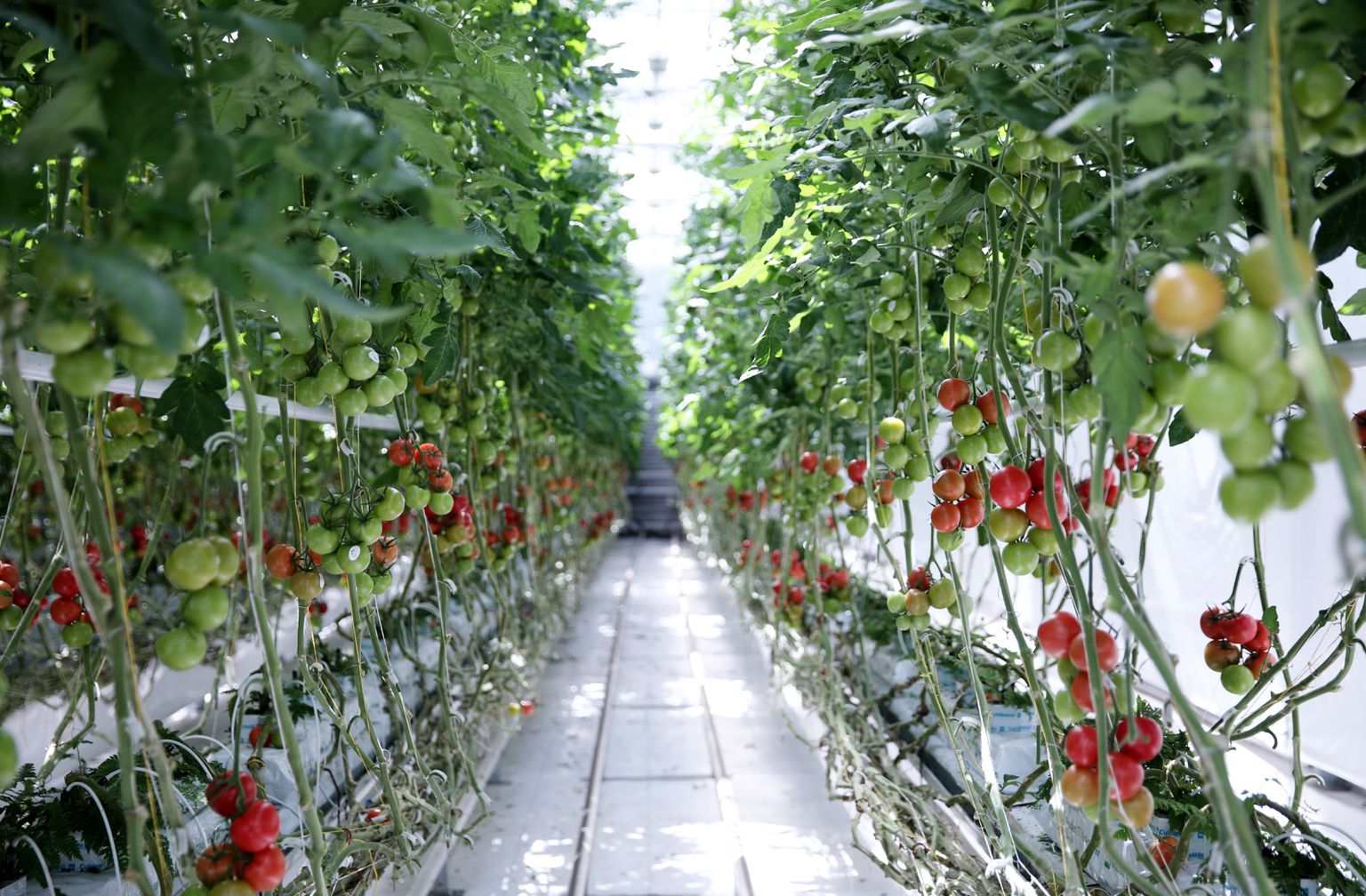
Heat and power from landfill biogas run greenhouses, around 350 t of tomatoes and 3 million cucumbers a year.
SIA “Getliņi EKO” was founded jointly by the municipalities of Riga and Ropaži and operates the largest municipal solid waste landfill in the Baltic states. Half of all unsorted household waste in Latvia ends up at Getliņi EKO.
The company's primary task is modern, safe and efficient management and disposal of municipal solid waste. Its secondary task is energy generation and growing tomatoes and cucumbers in greenhouses.
Around 300 000 tonnes of household waste arrive at the landfill each year, delivered daily by 200 to 300 trucks. The site combines the landfill itself, a biowaste treatment station (the tunnels) and waste processing equipment.
Environmental aspect
Sorting, recycling and reusing waste inside its own production cycles gives the company additional income and lowers its total emissions. Using the technical compost it produces from biowaste, the company can also restore and green the bulk sections of the landfill.
Construction waste
Getliņi EKO also accepts construction waste and processes it into new raw materials for the construction sector, crushed aggregate among them. Part of that output is used on site, for road repairs and for building new waste disposal cells, and the rest is sold as construction material on the open market.
In 2022 the company accepted 47 861.19 tonnes of construction waste for recycling, of which 47 743.09 tonnes returned to the economy as secondary raw materials.
Gas
Gas is captured in two ways: in the biodegradable waste treatment complex and in the waste disposal cells. Methane is the most valuable component of the gas.
In 2022 the company treated 79 180.7 tonnes of biowaste and produced 35 519.68 tonnes of compost from it. In the same year Getliņi EKO obtained 2 472 055 m³ of biogas from sorted biowaste and in the biowaste treatment station.
A further 10 012 672 m³ of biogas came from the waste buried in the landfill over the same period. Gas release in that process continues for more than 10 years, with the volume gradually declining.
In total the company produces roughly 130 000 to 140 000 nm³ of biogas a year. All of it can either be used as biofuel by converting it into bioethanol, or burned to produce heat and electricity.
Heat and electricity
Biogas from the landfill and from the biowaste treatment station is cleaned and fed to the energy block, where burning it generates electricity and heat. Burning the gas gives Getliņi EKO around 20 GWh of heat and 31 GWh of electricity a year.
One third of the electricity produced in the energy block is used by the company itself and the remaining two thirds are sold to Latvian consumers. If the energy used on site were sold as well, the total output would cover the needs of about 5000 households.
The recovered heat warms the Getliņi EKO greenhouses to keep the right climate for growing cucumbers and tomatoes. In spring the greenhouses also raise flower seedlings. The 1.3 hectares of greenhouses yield 350 tonnes of tomatoes and 3 million cucumbers every year.
Social aspect
Getliņi EKO keeps developing both as a modern, safe sorting and recycling centre for household waste and as an education and research centre. It runs environmental education sessions for adults and children alike.
About 8000 people visit the education centre at the landfill every year. On the tours children and adults see how the company works, meet the concepts of the circular economy and environmental protection, and learn why sorting waste matters and how to do it properly. Getliņi EKO works with public and non-governmental education institutions so that pupils can learn about recycling.
Getliņi EKO is a striking example of industrial symbiosis in waste management, and it plays an important role in the circular economy in Latvia and across the Baltic region. Waste is a resource.