Cross-sector collaboration and growth opportunities
Two formats that connect industry with the science sector: targeted industry discussions for concrete challenges, and experience-exchange trips.
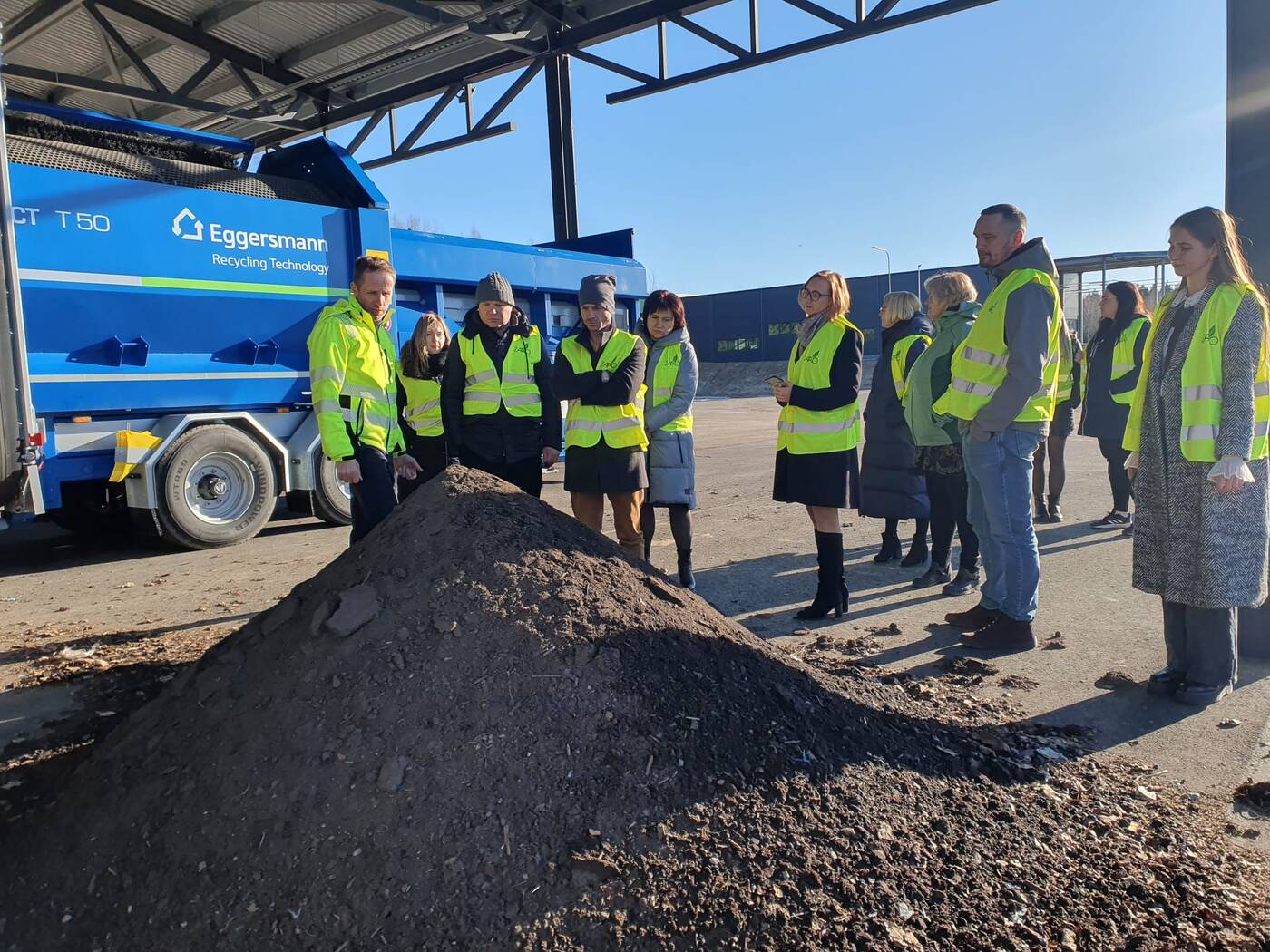
On the trips you see industrial symbiosis solutions in practice: how they work and how they create value.
Looking for new contacts or partnerships?
We believe structured dialogue is one of the most effective ways to find new solutions and develop joint projects. Discussions let companies, researchers and technology developers share knowledge, identify common interests and weigh up the practical scope for new initiatives. In practice we see that what is missing is a setting where collaboration-minded people from different sectors can meet around a shared goal.
We organise themed discussions, industry dialogues, experience exchanges and expert sessions for companies, institutions and research organisations that want to examine a specific question in depth or open up new directions for collaboration in industrial symbiosis.
Industry discussions
Industry discussions with representatives of different sectors are an instrument for quickly reaching a practical solution, identifying shared interests and evaluating real collaboration opportunities for projects with commercial potential.
Targeted expert meetings or cross-sector discussions, we tailor the format and content to your needs, connecting industry with the science sector.
If you have a specific challenge, we help find the right experts and set up a conversation that becomes the starting point for real projects.
Discussion: valorising brewing residues
Researchers and entrepreneurs from different sectors jointly analysed how to turn brewing by-products into resources of higher added value.
How spent grain and other brewing residues can become new raw materials and practical solutions.
Dr. sc. ing. Mārtiņš Andžs and Dr. sc. ing. Māris Puķe (Latvian State Institute of Wood Chemistry) presented the possibilities of using spent grain in biorefining processes and green chemistry, where the material can yield various higher-value compounds.
Spent grain as raw material for growing edible mushrooms, turning a by-product into a food resource. Life-cycle assessment.
Using spent grain to raise black soldier fly larvae for animal feed.
How fungal enzymes can be used to process by-products.
Research and development into using spent grain to obtain chemical compounds.
Routes to new, higher-value products.
Results, potential and the company's own perspective.
The discussion identified concrete directions for using brewing residues in new products and solutions, the challenges the sector faces and the scope for commercialisation, and it started potential partnerships.
The discussion brought together leading researchers from the University of Latvia, Riga Technical University, the Latvia University of Life Sciences and Technologies and the Latvian State Institute of Wood Chemistry, along with representatives of Nora Spora, Valmiermuižas alus and Biomund.
Experience-exchange trips
Experience-exchange trips let participants see industrial symbiosis solutions in practice - how they work and how they create value in companies in Latvia and abroad.
SINERGIA handles the programme design and logistics, so participants can focus fully on gaining experience and making decisions.
Thanks to SINERGIA's broad partner network, participants:
- clarify pressing questions and define goals together with experts and industry professionals,
- learn from companies and institutions with hands-on industrial-innovation experience,
- assess adopting similar practice in their own company.
Where we have been
Brussels, Belgium
Industrial symbiosis opportunities and sustainable brewing.
We saw local practice at first hand: how by-products of food and drink production (coffee grounds, straw, unsold bread, spent grain, wastewater) can become resources with higher added value, and how circular economy principles are applied in companies of very different sizes.
The visit took in PermaFungi, a social enterprise growing edible mushrooms on a substrate of coffee grounds and straw and developing a new line of mycomaterials; Brussels Beer Project, a modern urban brewery that brews with unsold bread and turns spent grain into flour; and La Trappe, a traditional Trappist brewery with an advanced planted wastewater treatment system and social sustainability practices.
Helsinki and Salo, Finland
Industrial symbiosis best practice in Finnish eco-industrial parks.
This was a chance to see how Finland puts its industrial symbiosis policy into practice and how its network of eco-industrial parks works, to hear the current Finnish national policy initiatives in the circular economy, and to exchange experience and ideas that help develop sustainable industrial areas in Latvia.
The first seminar day was held in Helsinki together with Sitra, the Finnish innovation fund for sustainability, and the following days were field visits to the industrial parks in Salo and Mikkeli. It was an excellent opportunity to widen cooperation with Nordic partners and to gather practical insight and inspiration for further development in Latvia.
Catalonia, Spain
Resource classification challenges and industrial symbiosis in practice.
To examine the challenges of resource classification and how regulation shapes the use of waste as a resource, and to gather practical lessons on implementing industrial symbiosis, digital tools and company engagement strategies in manufacturing companies and industrial parks.
See more here
The experience-exchange trip to Catalonia was organised by CLEANTECH HUB.